-
 Continue reading →: Brute Force Caesar Cipher V2 (Python)
Around a month ago I used Python to brute force the Caesar Cipher (I blogged about it here: https://geektechstuff.com/2019/12/22/brute-force-caesar-cipher-python/). My original solution outputted a solution for each possible cipher shift, which worked ok for small text samples but for larger texts started to take up a large portion of the…
-
 Continue reading →: Using A Raspberry Pi As An Apt Cache (Raspberry Pi)
If you have multiple Linux devices (e.g. Raspberry Pis) you may find it helpful to set up an apt cache to help with updates, especially if you have a poor internet connection or limited data allowance. An apt cache works by caching (i.e. saving) all the updates on one device…
-
 Continue reading →: Instant Messaging App With Vigenère Encryption (Python)
Over the last few weeks I have been looking at ciphers and encryption, which has included a Python program to brute force the Caesar cipher, Python to encrypt / decrypt with the Vigenère cipher , some Morse code and RSA Public Keys. With my recent looks into encryption, especially the…
-
 Continue reading →: Morse Code (Python)
11th January is #LearnYourNameInMorseCodeDay. I found this out as GCHQ tweeted the following today: .-.. . .- .-. -. / -.– — ..- .-. / -. .- — . / .. -. / — — .-. … . / -.-. — -.. . 🧐 — GCHQ (@GCHQ) January 11, 2020…
-
 Continue reading →: Vigenère Cipher (Python)
Previously I looked at the Vigenère cipher, but I did not have a working Python example. After some thought and consideration I came to the realisation that the Vigenère cipher is pretty much just a Caesar cipher with a shift that changes each letter, which then allowed me to figure…
-
 Continue reading →: Code The Classics Volume 1 Review (Python)
If you grew up in the early 90’s you may remember computing magazines that came with game programming code typed up inside, so that you the reader could type it into your computer and play the game. I’ll admit this was always a bit “hit and miss” when I attempted…
-
 Continue reading →: RSA Public-Key Cryptography (Python)
I am currently undertaking the “Encryption & Cryptography” course on FutureLearn (https://www.futurelearn.com/courses/encryption-and-cryptography/) and looking at public-key cryptography, specifically today the RSA public-key method. RSA is named after Ron Rivest, Adi Shamir and Leonard Adleman (Rivest-Shamir-Adleman; RSA) and the details for the algorithm were first published in 1977. English mathematician, Clifford…
-
 Continue reading →: Vigenère Cipher
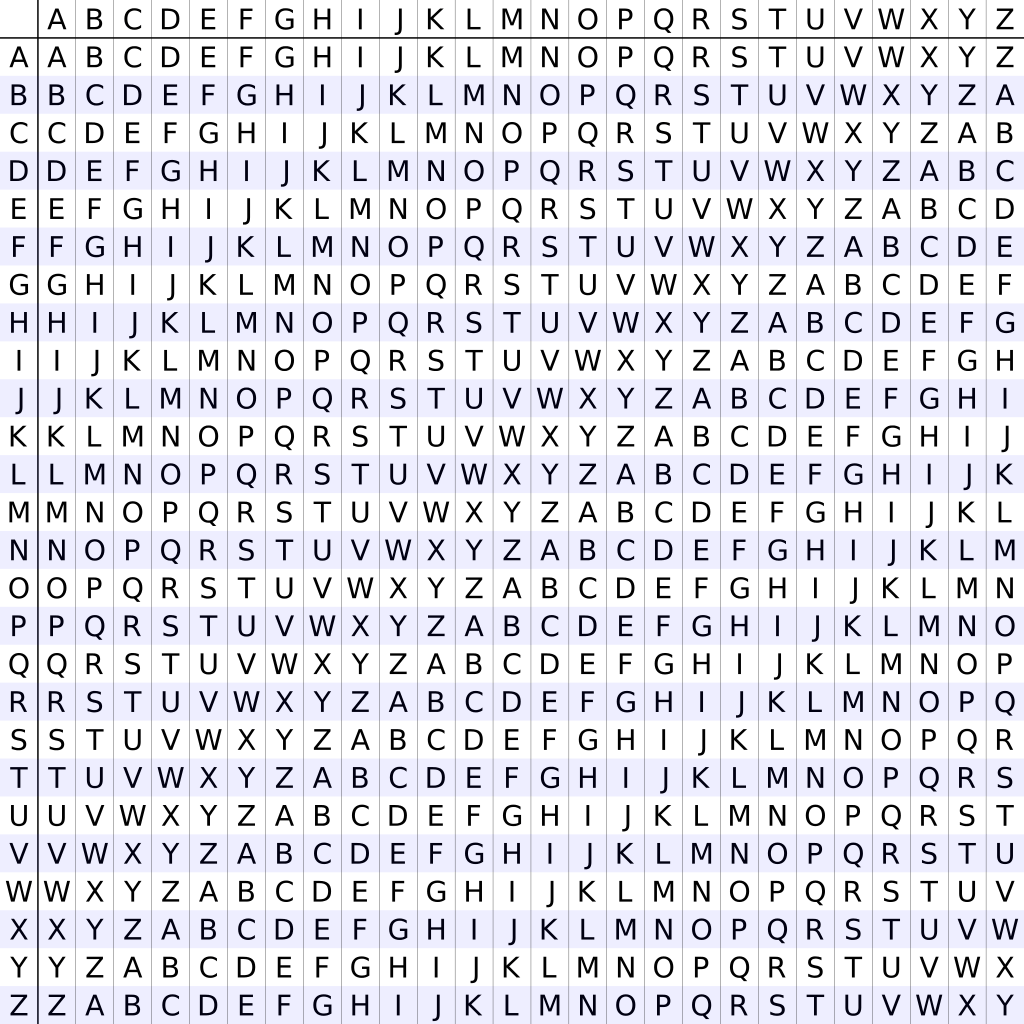
Named after French diplomat, Blaise de Vigenère, the Vigenère cipher built on the work / ideas of Giovan Battista Bellaso. Previously I have looked at the Caesar cipher and included a Python program that can brute force crack the cipher. The Caesar cipher can be easily broken either via frequency…
-
 Continue reading →: Brute Force Caesar Cipher (Python)
“The Caesar Cipher (Caesar Shift, Caesar’s Code) is a simple, easy to implement substitution cipher. The cipher is named after Julius Caesar. The cipher works by taking the letters of the message and then shifts the letter a defined space along the alphabet. For example a shift of 1 character…
-
 Continue reading →: Nessus Essentials – Vulnerability Assessment: Installing Nessus
Vulnerability assessment tools are used to identify risks/threats that may cause security issues in a system. Today I am going to look at a vulnerability assessment tool from Tenable called Nessus Essentials, which can (manually or automatically) scan networks for vulnerabilities and then output reports. Nessus Essentials Nessus (https://www.tenable.com/products/nessus) offers…
Hello,
Welcome to GeekTechStuff

My home away from home and where I will be sharing my adventures in the world of technology and all things geek.
The technology subjects have varied over the years from Python code to handle ciphers and Pig Latin, to IoT sensors in Azure and Python handling Bluetooth, to Ansible and Terraform and material around DevOps.
Let’s connect
Join the fun!
Stay updated with the sites latest blog posts by joining the newsletter.

 GeekTechStuff
You must be logged in to post a comment.