-
 Continue reading →: Engineering In Plain Sight – Book Review
Stop. Take a moment or two to look away from this review and at your surroundings. If you are reading this outside on a smart device (tablet, phone etc..) you may see roads, power cables and cell towers. If you are indoors you probably have electricity, internet connectivity and water…
-
Continue reading →: Exporting Local Group Members (Windows)
During a recent administrative task I needed to make a list of all members of a local group on a Microsoft Windows device. Originally I opened up Computer Management and started scrolling through the group. Physically writing down each member would take some time and I prefer the command line…
-
Continue reading →: The History Of The Computer -Book Review
“Don’t let fear get in the way and don’t be afraid to say ‘I don’t know’ or ‘I don’t understand’ – no question is a dumb question.” (Margaret Hamilton) The title “The History Of The Computer” makes me think of a heavy, hardback book filled with pages of text and…
-
 Continue reading →: Power UP Is Back For 2022!
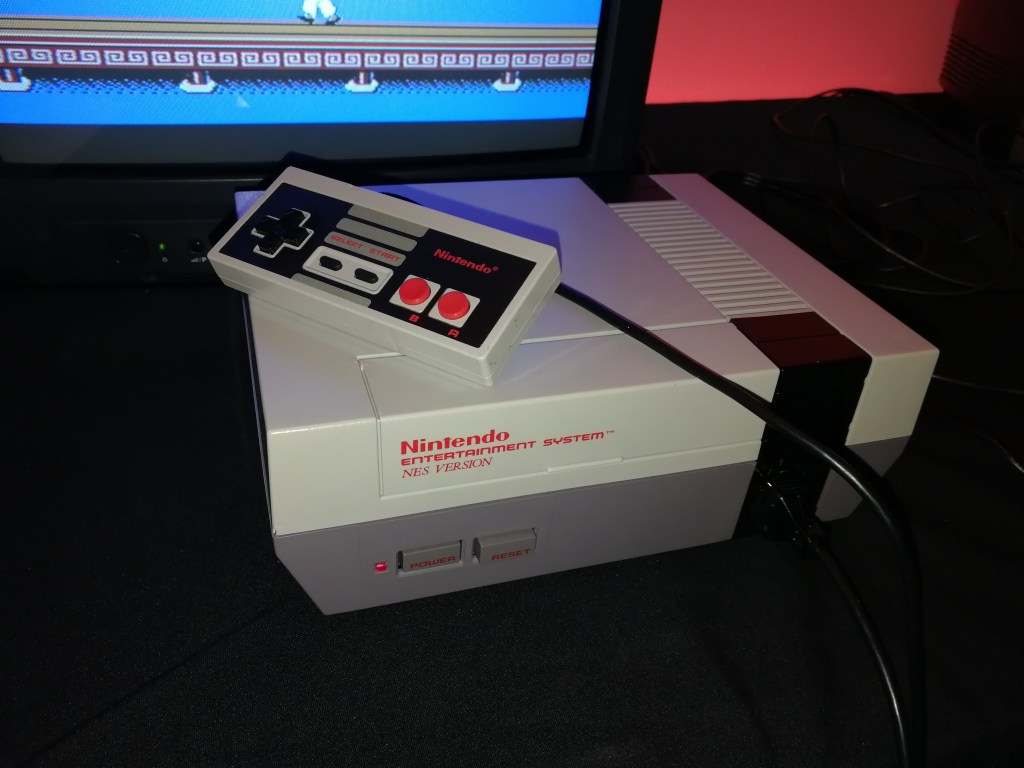
Five decades of video game fun is heading back to the Manchester Museum of Science & Industry (MOSI) for Summer 2022. I’ve previously blogged about Power UP (back in 2018), and made a short YouTube video when I visited in 2019: Sadly the last two years (2020, 2021) reduced my…
-
Continue reading →: Jupyter Notebook via Docker on Raspberry Pi (Python, Raspberry Pi)
With my Data Analytics learnings continuing at a fair pace I need to be able to turn data into something nice (e.g., plot it onto charts). I could use Power BI or R , but as regular readers may know my preference for most tasks is Python. Python offers several…
-
Continue reading →: Statistics: Descriptive vs Inferential, Population vs Sample (Notes)
Continuing on with my Data Analytics learnings, with a jump into Descriptive Statistics vs Inferential Statistics and an attempt to clear up Population vs Sample from my last blog post. Descriptive Statistics Descriptive statistics takes a sample, e.g. a group and records data about that sample. The data is then…
-
Continue reading →: Data Variability: Standard Deviation and Variance (Notes)
When discussing data variability (i.e. how much the values vary) there are two methods that can help. These are Sample Standard Deviation and Sample Variance. Other Terms That Are Needed Measures of Centre The middle or centre of the data. Measures of Spread How diverse from the Measure of Centre…
-
Continue reading →: SQL vs NoSQL (Notes)
A quick overview of the differences between SQL and NoSQL. SQL Structured Query Language (SQL) is used for relational databases, which are table based. For example, an column in table A (e.g. User_ID) may have a relation with a column in table B (e.g. Order_Ref) and table B may have…
-
Continue reading →: Data, Data Lakes and Data Warehouses (Notes)
Continuing on from my post looking at Data Architecture / Data Modelling, I am now going to look at data, data lakes and data warehouses by turning my notes into this blog post. Data Data can include emails, phone calls, financial transactions, sensor readings, metrics, logs, pretty much everything. When…
-
Continue reading →: Data Architecture, Data Modelling and Data Processing (Notes)
Data Architecture (DA) Most organisations / companies have enterprise architecture which describes how a computer network (with storage, servers, switches, routers etc.) is laid out. Data architecture is very similar in that it shows the models, rules, standards, and policies that are used in the collection, storage, and use of…
Hello,
Welcome to GeekTechStuff
My home away from home and where I will be sharing my adventures in the world of technology and all things geek.
The technology subjects have varied over the years from Python code to handle ciphers and Pig Latin, to IoT sensors in Azure and Python handling Bluetooth, to Ansible and Terraform and material around DevOps.
Let’s connect
Join the fun!
Stay updated with the sites latest blog posts by joining the newsletter.


 GeekTechStuff