-
 Continue reading →: Creating AWS S3 Buckets (AWS)
Today I am going to look at the storage solution that is AWS S3 (Simple Storage Service), and creating buckets via the web management console and the AWS CLI. Note: This post forms part of my (slightly new) AWS category of posts. What is AWS S3? AWS Simple Storage Service (S3)…
-
 Continue reading →: Using Ansible To Create And Manage Users (Linux / Raspberry Pi)
If you have multiple Linux devices (e.g. multiple Raspberry Pi computers) and multiple user accounts that need access to those devices (i.e. maybe a Code Club of pupils) and want their own user accounts on the devices it could be a lengthy process managing the accounts and devices. Which is…
-
Continue reading →: Launching A Virtual / EC2 Instance Via AWS CLI (AWS)
So far my AWS posts have dealt with launching an EC2 (Elastic Compute Cloud) instance via the AWS web management portal and installing the AWS CLI. This blog post looks at using the AWS CLI to launch an EC2 instance, and then how to stop/start the instance. First up, we…
-
Continue reading →: Installing AWS CLI & Some IAM Security (AWS)
The AWS (Amazon Web Services) CLI (Command Line Interface) offers a faster approach to interacting with AWS, especially if you are already use to CLIs like the Linux or Mac OS X terminal. Installing AWS CLI The AWS CLI can be installed on Linux or Mac OS X by entering:…
-
Continue reading →: Launching A Virtual Instance Via Web Console (AWS)
Amazon Web Services (AWS) can be found at http://aws.amazon.com and has a whole host of different features. This blog post will take you through launching a virtual machine instance using an Amazon Machine Image (AMI). If you are new to AWS then you can sign up for 12 months of free-tier services,…
-
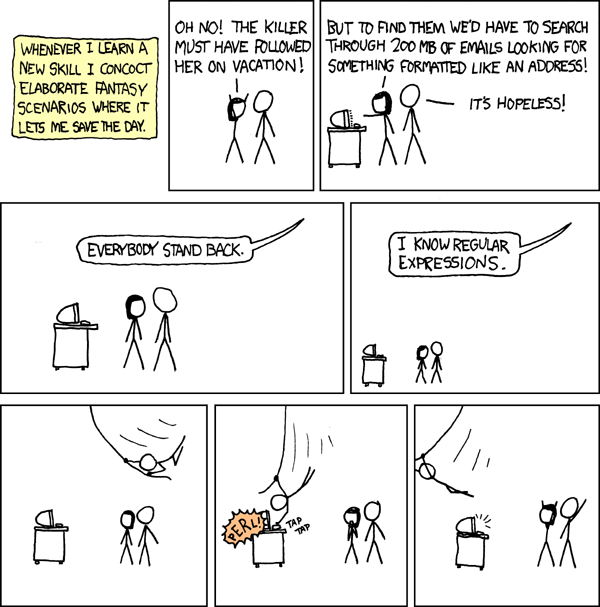 Continue reading →: Regular Expressions (Introducing)
Regular Expressions. I originally tried to grasp them whilst playing around with grep last November and they are extremely powerful, if not a little complicated. As I’m “upping my game” and expanding my knowledge I need to learn more about regular expressions, so I thought a blog post introducing them was…
-
 Continue reading →: Jenkins – Connecting To GitHub and some Python
Jenkins is a tool to help with Continuous Integration / Continuous Delivery (CI / CD). I originally looked at installing Jenkins as a Java web app on my Raspberry Pi during this post: https://geektechstuff.com/2019/05/26/installing-apache-tomcat-jenkins-raspberry-pi/ . I am now hoping to expand a little bit more on using Jenkins by building a…
-
 Continue reading →: Turning A CSV Back Into An Image (Python)
In my previous post I looked at turning an image (in this case XKCD #1696) into it’s pixel values. Now I am going to take the CSV of values and turn them back into an image. The Python for this function (including the Python for the functions to turn the…
-
 Continue reading →: Turning Images Into Values (Python)
Open CV (https://opencv.org) is a library available to Python (and other languages) to assist with image based machine learning. I am looking to turn an image into pixel values and then turn a file of values back into an image. I am going to be using XKCD #1696 (AI Research)…
-
 Continue reading →: SHA256 File Hash Values And How To Check Them (Raspberry Pi / Mac OS X / PowerShell)
Imagine that you are a software company and host an awesome free piece of software. One day your site is hacked and the download file for your software is replaced with a malicious version of the software. It might be days (or longer!) before you notice. Or what if someone…
Hello,
Welcome to GeekTechStuff

My home away from home and where I will be sharing my adventures in the world of technology and all things geek.
The technology subjects have varied over the years from Python code to handle ciphers and Pig Latin, to IoT sensors in Azure and Python handling Bluetooth, to Ansible and Terraform and material around DevOps.
Let’s connect
Join the fun!
Stay updated with the sites latest blog posts by joining the newsletter.




 GeekTechStuff
You must be logged in to post a comment.